
Technical Insights
Industrial Control Electronics Manufacturing:
Key Requirements and EMS Selection Criteria
Industrial control electronics are widely used in factory automation, production equipment, energy systems, transportation infrastructure and other professional applications. Unlike ordinary consumer electronics, industrial control products often need to operate continuously under demanding environmental conditions and maintain stable performance over a long product lifecycle.
For this reason, industrial control electronics manufacturing requires more than basic PCB assembly capability. Manufacturers must also provide stable production processes, reliable component management, strict quality control and long-term technical support.
This article explains the key requirements of industrial control electronics manufacturing and the important factors to consider when selecting an EMS manufacturing partner.
What Is Industrial Control Electronics Manufacturing?
Industrial control electronics manufacturing covers the production and assembly of electronic products used to monitor, control or automate industrial equipment and processes.
Common industrial control products include:
- Industrial controllers
- Human-machine interfaces
- Communication modules
- Motor control systems
- Power control units
- Industrial computers
- Sensor and signal-processing devices
- Factory automation equipment
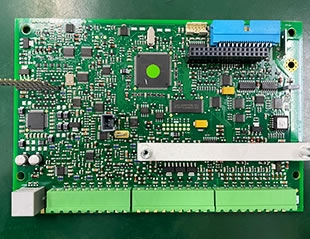
These products may contain printed circuit boards, electronic components, connectors, cables, mechanical parts, displays and power modules. Depending on the product design, the manufacturing process may include SMT assembly, DIP insertion, soldering, testing, system assembly and final product inspection.
Why Industrial Electronics Require Higher Manufacturing Stability
Consumer electronic products are often replaced within a relatively short period. Industrial equipment, however, may remain in operation for many years.
A control board installed inside factory equipment may need to operate continuously for long periods. If the board becomes unstable or fails, the entire production line could stop operating.
This means industrial control products usually place greater emphasis on:
- Long-term product reliability
- Consistent manufacturing quality
- Stable component supply
- Traceable production records
- Environmental resistance
- Long product lifecycle support
The manufacturer must therefore control both individual production processes and the overall consistency between different production batches.
Key Requirements for Industrial Control Electronics Manufacturing:
1. Stable SMT and DIP Assembly Processes
Industrial control boards often contain a combination of surface-mounted components and through-hole components.
SMT technology is commonly used for integrated circuits, resistors, capacitors and other small electronic components. DIP or through-hole assembly may be required for connectors, transformers, relays and components that need stronger mechanical support.
An experienced EMS manufacturer should be able to manage both SMT and DIP processes while maintaining consistent soldering quality.
Important process controls may include:
- Solder paste printing control
- Component placement accuracy
- Reflow temperature management
- Through-hole component insertion
- Wave soldering or manual soldering
- Visual inspection and process verification
Stable process parameters help reduce soldering defects, component misalignment and inconsistent production quality.
2. Component and Supply Chain Management
Industrial products usually have longer lifecycles than consumer electronics. However, electronic components may become unavailable, experience long lead times or reach end-of-life status during the product lifecycle.
Effective component management is therefore essential.
An EMS manufacturing partner should help manage:
- Approved component lists
- Component sourcing channels
- Alternative component evaluation
- Material lead times
- Obsolescence risks
- Inventory planning
Using components from reliable and traceable sources also helps reduce the risks of counterfeit, incorrect or unstable materials entering the production process.
3. Production Traceability
When a quality issue occurs, the manufacturer must be able to identify the affected materials, production batches and process records.
Production traceability may include:
- Material lot numbers
- Production dates
- Work order information
- Process inspection records
- Testing results
- Repair and rework records
A clear traceability system allows both the manufacturer and the customer to investigate problems more efficiently and determine whether an issue affects an individual unit or an entire production batch.
4. Testing and Quality Verification
Visual inspection alone is not sufficient for industrial control electronics.
Depending on the product design and application, the manufacturing process may include several types of testing, such as:
- Automated optical inspection
- In-circuit testing
- Functional testing
- Power-on testing
- Communication interface testing
- Aging or burn-in testing
- Final product inspection
The testing method should be defined according to the product’s functions, operating environment and quality requirements.
For example, an industrial communication module may require testing of communication ports and data transmission stability, while a power control board may require voltage, current and load testing.
5. Engineering Support and Design Review
Many manufacturing problems can be reduced before mass production begins.
Before production, the EMS manufacturer should review the PCB design, component layout, assembly method and testing requirements from a manufacturing perspective.
This process is commonly referred to as design for manufacturability.
Engineering review may help identify:
- Components that are difficult to source
- Layouts that may create soldering problems
- Inconsistent component specifications
- Testing access limitations
- Assembly interference
- Potential production risks
Early engineering involvement can reduce repeated modifications, shorten the production preparation period and improve mass-production stability.
From Prototype to Mass Production
Industrial control products often begin with small-volume prototype production before moving into mass production.
The prototype stage is used not only to verify product functions but also to confirm whether the product can be manufactured consistently.
A typical production process may include:
- Technical and manufacturing review
- Material preparation and sourcing
- Prototype or pilot production
- Process and function verification
- Production issue correction
- Mass-production preparation
- Ongoing quality and supply management
The transition from prototype production to mass production should be carefully managed. A prototype that functions correctly does not automatically guarantee stable mass-production results.
Before increasing production volume, the manufacturer should confirm the production parameters, testing methods, work instructions, material specifications and quality standards. This helps reduce quality variation and unexpected production problems during mass production.
How to Select an EMS Partner for Industrial Control Products
When selecting an EMS manufacturer, customers should not evaluate the supplier based only on unit price.
A lower quotation may not include the same level of material control, testing, engineering support or production management. Selecting an unsuitable supplier may result in quality problems, delivery delays and higher long-term costs.
The following factors should also be considered:
Manufacturing Capability
Confirm whether the manufacturer can provide the required SMT assembly, DIP assembly, soldering, testing and system integration capabilities.
The production equipment and processes should also be suitable for the complexity, volume and quality requirements of the product.
Quality Management
Review how the manufacturer controls incoming materials, production processes, inspection results and nonconforming products.
A reliable quality management system should include clear inspection standards, corrective actions and traceable production records.
Engineering Experience
The manufacturer should be able to identify manufacturing risks and communicate technical issues before mass production.
Experienced engineering support can help improve product manufacturability, reduce production defects and shorten the time required to resolve technical problems.
Supply Chain Stability
Evaluate whether the supplier can manage component sourcing, material shortages, long lead times and product lifecycle requirements.
For industrial products with long service periods, stable material supply and component lifecycle management are especially important.
Production Flexibility
Clear communication is especially important when managing technical requirements, component changes, production schedules and quality issues.
A reliable project management process helps ensure that manufacturing information, responsibilities and production progress are clearly communicated between the customer and the manufacturer.
Communication and Project Management
Clear communication is especially important when managing technical requirements, component changes, production schedules and quality issues.
A reliable project management process helps ensure that manufacturing information, responsibilities and production progress are clearly communicated between the customer and the manufacturer.
Building a Reliable Industrial Electronics Supply Chain
Industrial control electronics manufacturing is not simply the process of placing components onto a PCB.
It requires the coordinated management of materials, production processes, testing, engineering support and quality records.
A suitable EMS partner should understand the customer’s product application, operating environment and long-term supply requirements. The manufacturer must also be able to maintain consistent quality as the project moves from prototype development to mass production.
EEC Electronics provides electronics manufacturing services covering SMT assembly, DIP assembly, PCB assembly, testing and system integration. Through manufacturing process management and engineering support, we help customers improve production stability and establish a reliable supply chain for industrial control electronics.
Looking for an Industrial Control Electronics Manufacturing Partner?
Contact EEC Electronics to discuss your industrial control electronics manufacturing requirements, including prototype production, PCB assembly, testing and mass-production support.